|
SIC075202-Doggy Day Care-How to Start a Profitable |
WordPress Link
|
|

Carolyn Young stepbystepbusiness.com
& then augmented
Step 01: Decide if the Business Is Right for You
Step 02: Hone Your Idea
Step 03: Brainstorm a Doggy Daycare Name
Step 04: Create a Doggy Daycare Business Plan
Step 05: Register Your Business
Step 06: Register for Taxes
Step 07: Fund your Business
Step 08: Apply for Doggy Daycare Licenses and Permits
Step 09: Open a Business Bank Account
Step 10: Get Business Insurance
Step 11: Prepare to Launch
Step 12: Build Your Team
Step 13: Run a Doggy Daycare – Start Making Money!
Link Section
Score Links
Youtube Links
Fiverr Links
eBay Links
AI Links
More and more dog owners today consider their pets an integral part of their family, almost like their children, and refuse to leave them alone while they’re at work. This explains why the global pet sitting market is worth more than $2.5 billion and still growing.
If you’re a true dog lover, you can start your own doggy day-care and grab a share of that market while spending quality time with your furry friends. Demand for doggy day-care is massive, and it’s a simple business to start from home if you have a bit of space. You will, of course, run into challenges, so it’s a good idea to start with the right knowledge.
Thankfully, this step-by-step guide has all the information and insight you need to develop and launch your doggy day-care and put you on the path to puppy-filled prosperity.
Looking to register your business? A limited liability company (LLC)
is the best legal structure for new businesses because it is fast and simple.
Form your business immediately
using ZenBusiness LLC formation service or hire one of the Best LLC Services.
Step 1: Decide if the Business Is Right for You

Pros and cons
Every business has pros and cons that you should consider before deciding if a doggy day-care is right for you.
Pros
- Playtime
– Dogs are able to interact and play with other dogs
- Exercise Opportunity
– Provides physical and mental activities for dogs
- Huge Market
– Over 70 million US households own a dog
- Peace of Mind
– Gives dog owners peace of mind
Cons
- Risk of Injuries
– Dogs might get into fights with each other and get hurt
- Stressful environment
– Some dogs might find it overwhelming and stressful
Doggy day-care industry trends
Market analyst Grand View Research says the pet sitting market includes day-care services, dog walking, pet transportation, and more.
There’s also an opportunity for the savvy entrepreneur to make real money in the pet tech industry. Research firm Global Market Insights valued the pet tech industry at more than $5 billion in 2021 and expects it to grow a whopping 20% annually through 2028.[1]
Industry size and growth
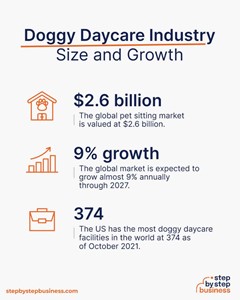
- Industry size and past growth –
Grand View Research values the global pet sitting market at $2.6 billion, with the US contributing more than a third of the revenue.[2]
- Growth forecast –
The global market is expected to grow almost 9% annually through 2027.
- Number of businesses – The US has the most doggy day-care facilities in the world at 374 as of October 2021.[3]
Trends and challenges
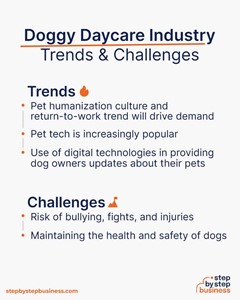
Trends in doggy day-care industry include:
- Pet humanization culture and return-to-work trend will drive demand for doggy day-care services
- Pet tech, such as smart vests that monitor heart rate and collars with a geo-location device, are increasingly popular
- Use of digital technologies in providing dog owners updates about their pets
Challenges faced by the doggy day-care industry are:
- Risk of bullying, fights, and injuries
- Maintaining the health and safety of dogs
Consumer spending
In 2021, US pet owners spent an incredible $126 billion caring for their animals, according to research firm Statista.[4]
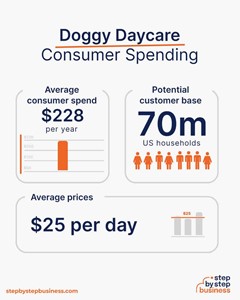
- Average consumer spend –
Dog owners each spend an average of $228 a year on kennel boarding, according to the latest APPA survey.[5]
- Potential customer base – Nearly 70 million US households own a dog.
- Average prices
– Doggy day-care in the US costs $25 per day and $15 per half-day.[6]
What kind of people work in doggy day-care?
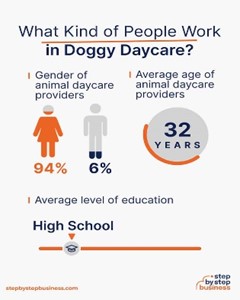
- Gender –
94% of animal day-care providers in the US are female, while 6% are male.[7]
- Average level of education – 36% of animal day-care providers have a high school diploma and 25% hold an associate degree.[8]
- Average age – The average age of an employed animal day-care provider in the US is 32 years old.
How much does it cost to start a doggy day-care business?
The startup costs for a doggy day-care range from $3,000 to $15,000. The high end includes renting a facility, so if you start your day-care from home your costs will be much lower.
You’ll need a handful of items to successfully launch your doggy day-care business. Here’s a list to get you started:
- Crates for holding dogs
- Food and water bowls
- Toys and treats
|
Startup Costs |
Ballpark Range |
Average |
|
Setting up a business name and corporation |
$150 – $200 |
$175 |
|
Licenses and permits |
$100 – $300 |
$200 |
|
Insurance |
$100 – $300 |
$200 |
|
Business cards and brochures |
$200 – $300 |
$250 |
|
Website setup |
$1,000 – $3,000 |
$2,000 |
|
Day-care equipment |
$1,500 – $5,000 |
$3,250 |
|
Facility rental |
$0 – $6,000 |
$3,000 |
|
Total |
$3,050 – $15,100 |
$9,075 |
How much can you earn from a doggy day-care business?
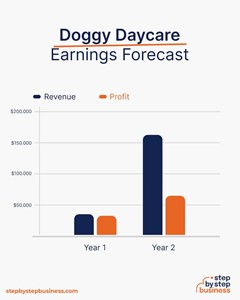
The average price of doggy day-care in the US is $25 per day per dog. If you start your day-care from home, your profit margin should be around 90%.
If you care for five dogs a day, five days a week you’ll bring in over $32,000 in annual revenue. This would mean almost $30,000 in profit, assuming that 90% margin. As your brand gains recognition, you might rent a commercial space and hire staff, reducing your margin to around 40%. If you care for 25 dogs a day, 5 days a week, you’ll have annual revenue of over $160,000 and profit of $65,000.
What barriers to entry are there?
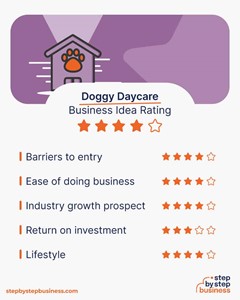
There are a few barriers to entry for a doggy day-care. Your biggest challenges will be:
- You need enough space, including outdoor space, to host at your home
- You’ll face competition from established area day-cares
Related Business Ideas
If you’re still not sure whether this business idea is the right choice for you, here are some related business opportunities to help you on your path to entrepreneurial success.
Step 2: Hone Your Idea

Now that you know what’s involved in starting a doggy day-care, it’s a good idea to hone your concept in preparation to enter a competitive market.
Market research will give you the upper hand, even if you’re already positive that you have a perfect product or service. Conducting market research is important, because it can help you understand your customers better, who your competitors are, and your business landscape.
Why? Identify an opportunity
Research doggy day-cares in your area to examine their products and services, price points, and customer reviews. You’re looking for a market gap to fill. For instance, maybe the local market is missing a doggy day-care that watches dogs on evenings, weekends, holidays, or a day-care that offers special grooming services.
You might consider targeting a niche market by specializing in a certain aspect of your industry.
This could jumpstart your word-of-mouth marketing and attract clients right away.
What? Determine your products or services
You may decide to offer other products or services to increase revenue. You could offer:
- Bathing and grooming
- Dog training
- Overnight boarding
How much should you charge for doggy day-care?
Prices for doggy day-care range from $12 to $38 per day. Once you open a facility outside your home you’ll have costs for rent, overhead, and labor. At that point you should target a profit margin of around 40%.
Once you know your costs, you can use this Step By Step profit margin calculator to determine your mark-up and final price points. Remember, the prices you use at launch should be subject to change if warranted by the market.
Who? Identify your target market
Your target market will be dog owners, most likely professionals who need day-care during work hours. You can probably find these people on Facebook or LinkedIn.
Where? Choose your business premises
In the early stages, you may want to run your business from home to keep costs low. But as your business grows, you’ll likely need to hire workers for various roles and may need to rent out a facility. You can find commercial space to rent in your area on Craigslist, Crexi, and Commercial Cafe.
When choosing a commercial space, you may want to follow these rules of thumb:
- Central location accessible via public transport
- Ventilated and spacious, with good natural light
- Flexible lease that can be extended as your business grows
- Ready-to-use space with no major renovations or repairs needed
Step 3: Brainstorm a Doggy Day-care Name

Your business name is your business identity, so choose one that encapsulates your objectives, services, and mission in just a few words. You probably want a name that’s short and easy to remember, since much of your business, and your initial business in particular, will come from word-of-mouth referrals.
Here are some ideas for brainstorming your business name:
- Short, unique, and catchy names tend to stand out
- Names that are easy to say and spell tend to do better
- The name should be relevant to your product or service offerings
- Ask around — family, friends, colleagues, social media — for suggestions
- Including keywords, such as “pet day-care” or “doggy day-care”, boosts SEO
- Choose a name that allows for expansion: “Doggy Daydreams Co.” over “Small Dog Day-care Services”
- Avoid location-based names that might hinder future expansion
- Use online tools like the Step by Step business name generator. Just type in a few keywords and hit “generate” and you’ll have dozens of suggestions at your fingertips.
Once you’ve got a list of potential names, visit the website of the US Patent and Trademark Office to make sure they are available for registration and check the availability of related domain names using our Domain Name Search tool. Using “.com” or “.org” sharply increases credibility, so it’s best to focus on these.
Finally, make your choice among the names that pass this screening and go ahead with domain registration and social media account creation. Your business name is one of the key differentiators that set your business apart. Once you pick your company name, and start with the branding, it is hard to change the business name. Therefore, it’s important to carefully consider your choice before you start a business entity.
Step 4: Create a Doggy Day-care Business Plan
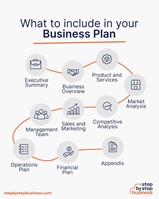
Every business needs a plan. This will function as a guidebook to take your startup through the launch process and maintain focus on your key goals. A business plan also enables potential partners and investors to better understand your company and its vision:
- Executive Summary:
A concise summary outlining the core aspects of the doggy day-care business plan, including its objectives, mission, and key highlights.
- Business Overview:
An overview of the doggy day-care business, providing information on its structure, location, and the specific needs it aims to address in the market.
- Product and Services:
Detailed descriptions of the services offered, such as dog day-care, grooming, and training, emphasizing the unique selling points that set the business apart.
- Market Analysis:
A thorough examination of the target market, including demographics, trends, and potential growth, to inform strategic decisions and ensure alignment with customer needs.
- Competitive Analysis:
Evaluation of competitors in the doggy day-care industry, identifying strengths, weaknesses, opportunities, and threats to help the business differentiate and position itself effectively.
- Sales and Marketing:
A comprehensive plan outlining how the business will attract and retain customers, encompassing advertising, promotions, and customer relationship strategies.
- Management Team:
Introductions and brief bios of the key individuals who will be managing and leading the doggy day-care business, highlighting their relevant experience and skills.
- Operations Plan:
A detailed plan describing the day-to-day operations of the doggy day-care, covering staffing, facility management, and processes to ensure smooth and efficient business functioning.
- Financial Plan:
A projection of the doggy day-care’s financial performance, including startup costs, revenue forecasts, and profit margins, providing a roadmap for financial sustainability and growth.
- Appendix:
Supplementary materials, such as additional research, legal documents, and any other relevant information supporting the components outlined in the business plan.
If you’ve never created a business plan, it can be an intimidating task. You might consider hiring a business plan specialist to create a top-notch business plan for you.
Step 5: Register Your Business
Registering your business is an absolutely crucial step — it’s the prerequisite to paying taxes, raising capital, opening a bank account, and other guideposts on the road to getting a business up and running.
Plus, registration is exciting because it makes the entire process official. Once it’s complete, you’ll have your own business!
Choose where to register your company
Your business location is important because it can affect taxes, legal requirements, and revenue. Most people will register their business in the state where they live, but if you are planning to expand, you might consider looking elsewhere, as some states could offer real advantages when it comes to doggy day-care centres.
If you’re willing to move, you could really maximize your business! Keep in mind, it’s relatively easy to transfer your business to another state.
Choose your business structure
Business entities come in several varieties, each with its pros and cons. The legal structure you choose for your doggy day-care will shape your taxes, personal liability, and business registration requirements, so choose wisely.
Here are the main options:
- Sole Proprietorship
– The most common structure for small businesses makes no legal distinction between company and owner. All income goes to the owner, who’s also liable for any debts, losses, or liabilities incurred by the business. The owner pays taxes on business income on his or her personal tax return.
- General Partnership
– Similar to a sole proprietorship, but for two or more people. Again, owners keep the profits and are liable for losses. The partners pay taxes on their share of business income on their personal tax returns.
- Limited Liability Company (LLC)
– Combines the characteristics of corporations with those of sole proprietorships or partnerships. Again, the owners are not personally liable for debts.
- C Corp
– Under this structure, the business is a distinct legal entity and the owner or owners are not personally liable for its debts. Owners take profits through shareholder dividends, rather than directly. The corporation pays taxes, and owners pay taxes on their dividends, which is sometimes referred to as double taxation.
- S Corp
– An S-Corporation refers to the tax classification of the business but is not a business entity. An S-Corp can be either a corporation or an LLC, which just needs to elect to be an S-Corp for tax status. In an S-Corp, income is passed through directly to shareholders, who pay taxes on their share of business income on their personal tax returns.
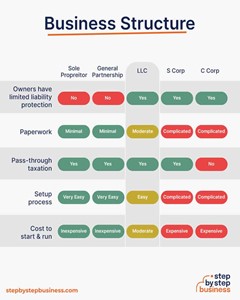
We recommend that new business owners choose LLC as it offers liability protection and pass-through taxation while being simpler to form than a corporation. You can form an LLC in as little as five minutes using an online LLC formation service. They will check that your business name is available before filing, submit your articles of organization, and answer any questions you might have.
Step 6: Register for Taxes
The final step before you’re able to pay taxes is getting an Employer Identification Number, or EIN. You can file for your EIN online or by mail or fax: visit the IRS website to learn more. Keep in mind, if you’ve chosen to be a sole proprietorship you can simply use your social security number as your EIN.
Once you have your EIN, you’ll need to choose your tax year. Financially speaking, your business will operate in a calendar year (January–December) or a fiscal year, a 12-month period that can start in any month. This will determine your tax cycle, while your business structure will determine which taxes you’ll pay.
It is important to consult an accountant or other professional to help you with your taxes to ensure you are completing them correctly.
Step 7: Fund your Business
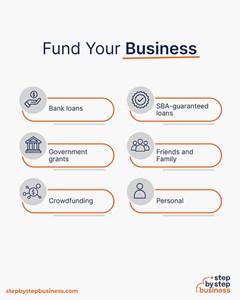
Securing financing is your next step and there are plenty of ways to raise capital:
- Bank loans: This is the most common method, but getting approved requires a rock-solid business plan and strong credit history.
- SBA-guaranteed loans: The Small Business Administration can act as guarantor, helping gain that elusive bank approval via an SBA-guaranteed loan.
- Government grants: A handful of financial assistance programs help fund entrepreneurs. Visit Grants.gov to learn which might work for you.
- Friends and Family:
Reach out to friends and family to provide a business loan or investment in your concept. It’s a good idea to have legal advice when doing so because SEC regulations apply.
- Crowdfunding: Websites like Kickstarter and Indiegogo offer an increasingly popular low-risk option, in which donors fund your vision. Entrepreneurial crowd funding sites like Fundable and WeFunder enable multiple investors to fund your business.
- Personal:
Self-fund your business via your savings or the sale of property or other assets.
Bank and SBA loans are probably the best options, other than friends and family, for funding a doggy day-care business. You might also try crowd funding if you have an innovative concept.
Related read: Best Small Business Loans
Step 8: Apply for Doggy Day-care Licenses and Permits

Starting a doggy day-care business requires obtaining a number of licenses and permits from local, state, and federal governments.
Federal regulations, licenses, and permits associated with starting your business include doing business as (DBA), health licenses and permits from the Occupational Safety and Health Administration (OSHA), trademarks, copyrights, patents, and other intellectual properties, as well as industry-specific licenses and permits.
You may also need state-level and local county or city-based licenses and permits. The license requirements and how to obtain them vary, so check the websites of your state, city, and county governments or contact the appropriate person to learn more.
You could also check this SBA guide for your state’s requirements, but we recommend using MyCorporation’s Business License Compliance Package. They will research the exact forms you need for your business and state and provide them to ensure you’re fully compliant.
This is not a step to be taken lightly, as failing to comply with legal requirements can result in hefty penalties.
If you feel overwhelmed by this step or don’t know how to begin, it might be a good idea to hire a professional to help you check all the legal boxes.
Step 9: Open a Business Bank Account
Before you start making money you’ll need a place to keep it, and that requires opening a bank account.
Keeping your business finances separate from your personal account makes it easy to file taxes and track your company’s income, so it’s worth doing even if you’re running your doggy day-care business as a sole proprietorship. Opening a business bank account is quite simple and similar to opening a personal one. Most major banks offer accounts tailored for businesses — just inquire at your preferred bank to learn about their rates and features.
Banks vary in terms of offerings, so it’s a good idea to examine your options and select the best plan for you. Once you choose your bank, bring in your EIN (or Social Security Number if you decide on a sole proprietorship), articles of incorporation, and other legal documents and open your new account.
Step 10: Get Business Insurance
Business insurance is an area that often gets overlooked yet it can be vital to your success as an entrepreneur. Insurance protects you from unexpected events that can have a devastating impact on your business.
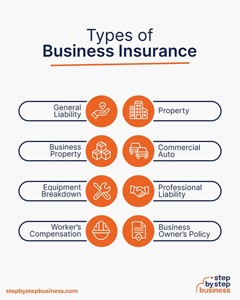
Here are some types of insurance to consider:
- General liability: The most comprehensive type of insurance, acting as a catch-all for many business elements that require coverage. If you get just one kind of insurance, this is it. It even protects against bodily injury and property damage.
- Business Property: Provides coverage for your equipment and supplies.
- Equipment Breakdown Insurance: Covers the cost of replacing or repairing equipment that has broken due to mechanical issues.
- Worker’s compensation:
Provides compensation to employees injured on the job.
- Property:
Covers your physical space, whether it is a cart, storefront, or office.
- Commercial auto:
Protection for your company-owned vehicle.
- Professional liability: Protects against claims from a client who says they suffered a loss due to an error or omission in your work.
- Business owner’s policy (BOP): This is an insurance plan that acts as an all-in-one insurance policy, a combination of any of the above insurance types.
Step 11: Prepare to Launch

As opening day nears, prepare for launch by reviewing and improving some key elements of your business.
Essential software and tools
Being an entrepreneur often means wearing many hats, from marketing to sales to accounting, which can be overwhelming. Fortunately, many websites and digital tools are available to help simplify many business tasks.
You can use industry-specific software, such as Pawfinity, DoggieDashboard, or ProPet, to help you with scheduling, online booking, and dog check-ins and check-outs.
Read also: Best Business Phone Services
Accounting
- Popular web-based accounting programs for smaller businesses include Quickbooks, Freshbooks, and Xero.
- If you’re unfamiliar with basic accounting, you may want to hire a professional, especially as you begin. The consequences for filing incorrect tax documents can be harsh, so accuracy is crucial.
Develop your website
Website development is crucial because your site is your online presence and needs to convince prospective clients of your expertise and professionalism.
You can create your own website using website builders. This route is very affordable, but figuring out how to build a website can be time-consuming. If you lack tech-savvy, you can hire a web designer or developer to create a custom website for your business.
They are unlikely to find your website, however, unless you follow Search Engine Optimization (SEO) practices. These are steps that help pages rank higher in the results of top search engines like Google.
Marketing
For your doggy day-care, the marketing strategy should focus on showcasing the safe, fun, and nurturing environment you provide for dogs. Emphasize your commitment to pet welfare, the qualifications and experience of your staff, and the range of activities and services you offer. The goal is to establish your day-care as a trustworthy, engaging, and caring place where dogs can socialize, play, and receive excellent care while their owners are away.
Kickstart Marketing
- Professional Branding: Your branding should communicate care, warmth, and professionalism, reflected in everything from your logo and website to your facility’s decor and staff uniforms.
- Direct Outreach: Network with local veterinarians, pet stores, and groomers to build referral relationships. Attending local pet events and dog shows can also raise your profile.
Digital Presence and Online Marketing
- Professional Website and SEO: Develop a user-friendly website that highlights your services, facilities, and team qualifications. Use SEO best practices to rank well for local searches related to doggy day-care, pet care services, and dog socialization.
- Social Media Engagement: Use platforms like Instagram and Facebook to post engaging content, including photos and videos of dogs enjoying their time at your facility, customer testimonials, and educational pet care tips.
Content Marketing and Engagement
- Dog Care Blog: Share informative blog posts about dog health, behaviour training tips, and the benefits of dog socialization.
- Email Newsletters: Keep your clients and potential customers updated on any new services, events, or special offers through regular email newsletters.
- Customer Success Stories: Feature stories and testimonials from your clients, focusing on the positive impact your day-care has had on their pets.
Experiential and In-Person Engagements
- Open House Events: Host open house events where potential clients can tour your facility, meet the staff, and see first-hand the care and attention their pets will receive.
- Participation in Community Events: Engage in local community events, sponsor dog-friendly activities, or set up booths at pet expos and fairs.
Collaborations and Community
- Partnerships with Pet Businesses: Collaborate with local pet-related businesses for mutual promotion. For example, offer a discount to customers of a nearby pet store and vice versa.
- Community Involvement: Get involved in local community projects or charity events that focus on pets and animal welfare.
Customer Relationship and Loyalty Programs
- Loyalty Rewards Program: Implement a loyalty program that offers discounts or special perks to regular clients.
- Referral Incentives: Encourage clients to refer friends by offering them a discount or free day of day-care for each successful referral.
Promotions and Advertising
- Targeted Local Advertising: Use local newspapers, community boards, and social media ads to reach pet owners in your area.
- Flyers and Brochures: Distribute flyers and brochures in high foot traffic areas frequented by dog owners, such as parks, veterinary clinics, and pet stores.
Focus on USPs
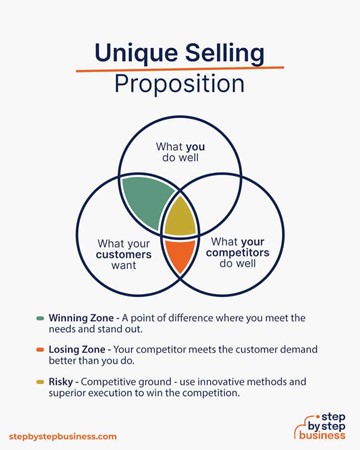
Unique selling propositions, or USPs, are the characteristics of a product or service that set it apart from the competition. Customers today are inundated with buying options, so you’ll have a real advantage if they are able to quickly grasp how your doggy day-care meets their needs or wishes. It’s wise to do all you can to ensure your USPs stand out on your website and in your marketing and promotional materials, stimulating buyer desire.
Global pizza chain Domino’s is renowned for its USP: “Hot pizza in 30 minutes or less, guaranteed.” Signature USPs for your doggy day-care business could be:
- A playground paradise for your beloved dog
- Old and young dogs can learn new tricks with our training
- Give your dog a spay day with our expert bathing and grooming
Networking
You may not like to network or use personal connections for business gain. But your personal and professional networks likely offer considerable untapped business potential. Maybe that Facebook friend you met in college is now running a doggy day-care business, or a LinkedIn contact of yours is connected to dozens of potential clients. Maybe your cousin or neighbour has been working in pet care services for years and can offer invaluable insight and industry connections.
The possibilities are endless, so it’s a good idea to review your personal and professional networks and reach out to those with possible links to or interest in doggy day-care. You’ll probably generate new customers or find companies with which you could establish a partnership. Online businesses might also consider affiliate marketing as a way to build relationships with potential partners and boost business.
Step 12: Build Your Team

If you’re starting out small from a home office, you may not need any employees. But as your business grows, you will likely need workers to fill various roles. Potential positions for a doggy day-care business would include:
- Dog Caregivers
– feed and care for dogs
- Groomers – bathe and groom dogs
- Marketing Lead – SEO strategies, social media, other marketing
At some point, you may need to hire all of these positions or simply a few, depending on the size and needs of your business. You might also hire multiple workers for a single role or a single worker for multiple roles, again depending on need.
Free-of-charge methods to recruit employees include posting ads on popular platforms such as LinkedIn, Facebook, or Jobs.com. You might also consider a premium recruitment option, such as advertising on Indeed, Glassdoor, or ZipRecruiter. Further, if you have the resources, you could consider hiring a recruitment agency to help you find talent.
Related read: Best Job Posting Sites
Step 13: Run a Doggy Day-care – Start Making Money!

Demand for doggy day-care is growing as people increasingly give their pets the level of care that used to be reserved for people. It’s an industry worth more than $2.5 billion, and you can grab a piece of that market for a very small investment.
It’s a fairly simple business to start from home and eventually expand into a larger facility. The profit potential is good, especially if you’re able to franchise and take over the doggy day-care market! You’re off to a great start by acquiring the invaluable information in this guide, and you should now be ready to begin your entrepreneurial journey.
Doggy Day-care Business FAQs
Can I run a doggy day-care from my home?
As long as there are no restrictions where you live, you can run a doggy day-care from home. You need to have enough space, including outdoor space, for the dogs to play and be well-supervised.
How profitable is a doggy day-care?
Prices for doggy day-care can be as high as $38 per day, so you can make money even if you just care for a few dogs in your home. You can become more profitable if you rent a larger facility so that you can care for many dogs at once.
How do I differentiate my doggy day-care business from competitors?
You need to offer a great environment for dogs and hire qualified people to work in your day-care. You could also offer extended hours.
Can you start doggy day-care on the side?
It would be very difficult to start a doggy day-care on the side because most people need doggy day-care during normal business hours. An alternative would be a pet sitting business.
How do I handle and manage difficult or aggressive dogs?
You can take courses to learn dog handling, but you may want to refuse clients that have aggressive dogs.
Score Links
“Welcome To The Family!” -Zoomies K9 Camp | SCORE
Seven Pet Businesses to Start – SCORE
Start Up Guide Check List for Entrepreneurs | SCORE
The Action Plan for Pet Care Services | SCORE
Youtube Links
How to Start a Dog Daycare Business – YouTube
How To Start A Dog Daycare Business – YouTube
Start A Dog Day Care and Pet Boarding Business – YouTube
Start a Dog Kennel Business- HOW MUCH WE ARE MAKING! & Ups
Starting a Dog Daycare Business Guide – YouTube
Fiverr Links
Best Web Hosting Services for Small Businesses
Design a classic logo for a high end doggy day care business
Design a classic logo for a high end doggy day care business
Practical Guides to Starting and Growing a Business | Fiverr
Write a perfect business plan for doggy daycare, dog training
eBay Links
Dog Daycare Business: How To Start A Dog Day Care Business And
Doggy Business 101 : A Practical Guide to Starting and Running
The Absolute Cheapest Way to Start a Doggy Daycare Business
The Lucrative Dog Day Care Business – eBay
THE LUCRATIVE DOG DAY CARE BUSINESS Your expert guide
AI Links
Doggy daycare – There’s An AI For That
Easy-to-Use and Robust Dog Daycare Software by Gingr
Meet Daisy: Your 24/7 AI-Powered Dog Care Companion
Pawfinity Premium Dog Daycare Software In The Cloud, FREE TRIAL
Woof.AI creates chatbot for pet care powered by Google Cloud
For more information, email George Schaefer at
 Business Topics & Grants
Leave a comment